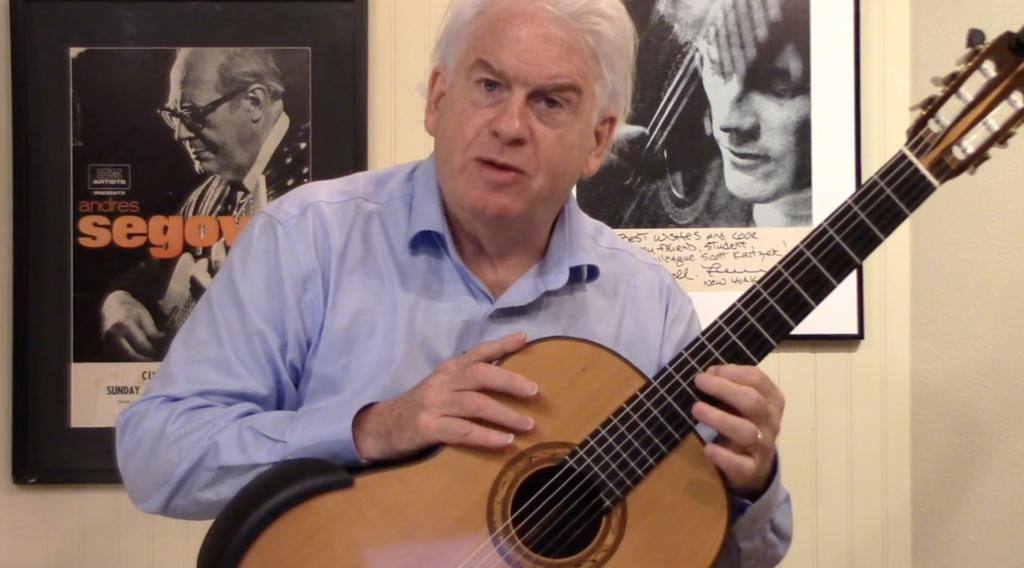
I decided to bump up the dates of these 1 hour workshops on technique, practice and performance anxiety, and make them FREE due to the COVID19 virus and its ramifications.
Tech Talk, Perfect Practice and Performance Anxiety Rehab (PAR) will regular workshops for Premium Members on my upcoming new website. Check them out – at no charge.
Each workshop will be comprised of Performers and Auditors. I’ll interact with Performers directly while Auditors observe. Both groups can ask questions.
All participants will need to become a Subscriber. If you’re not already a Subscriber become one by going to the Subscribe button on the left hand panel of this page.
Performers will play or demonstrate (depending on the workshop) while Auditors can watch and participate in the Q & A at the end of each session.
All three workshops will be broadcast over ZOOM. Space is limited so register soon. Once you’ve subscribed contact me (Contact Scott) and let me know which workshop you’d like to attend (you can attend all three). Also let me know if you’d like to act as a Presenter or Attendee. You’ll get a confirmation of your registration and the ZOOM workshop link.
Tech Talk for the Classical Guitarist
Saturday, March 28 @ 2:00 PM PDT
Scott’s Tech Talk for the Classical Guitarist will explore the foundation for a solid technique for the classical guitarist. Subjects will focus around proper positioning, efficient movements and technical exercises that can aid in a more relaxed, more efficient way of playing resulting in better accuracy and faster playing.
Performers can demonstrate their technique questions on the guitar.
Perfect Practice
Saturday, April 4 @ 2:00 PM PDT
All the information on the internet won’t make you a better guitar player without practice. But even players who practice consistently often show few results for their efforts and with good reason; a practice that feels good is one that produces short term results. Conversely a perfect practice actually feels like anything but. Since the benefits of good practice often don’t manifest themselves for weeks, players often chase a variety of concepts only to come up short. A consistent practice, based on newly discovered information on how we learn, will reward the player with a more effective practice and positive results, with less time spent in the practice room.
I have spent decades developing practice guidelines and tools that will keep your practice effective and fresh. In addition you’ll learn how to use the Kritzer Studio Practice Plan.
Performers will get feedback on their current practice regime and practice techniques.
Performance Anxiety Rehab
Saturday, April 18 @ 2:00 PM PDT
Performance anxiety robs us of our potential and neutralizes our hard work in the practice room. While some nervousness is natural and even beneficial prior to a performance, its important to eliminate the needless and even damaging effects of performance anxiety that undermine your hard work and potential developed in the practice room.
Join me for this workshop where we’ll begin to learn how to manage performance anxiety through effective practice tools resulting in a more satisfying performance experience.
Performers will get immediate feedback on how to develop performance skills guided by intuition instead of that destructive voice.
In addition, over time we’ll form a community of players who will meet for PAR PODS; a safe environment to try out your newly learned performing skills!
Classical Guitar Immersion – Performance Development – June 12-19, 2020 Menucha Retreat and Conference Center in Corbett, OregonMaximum: 7
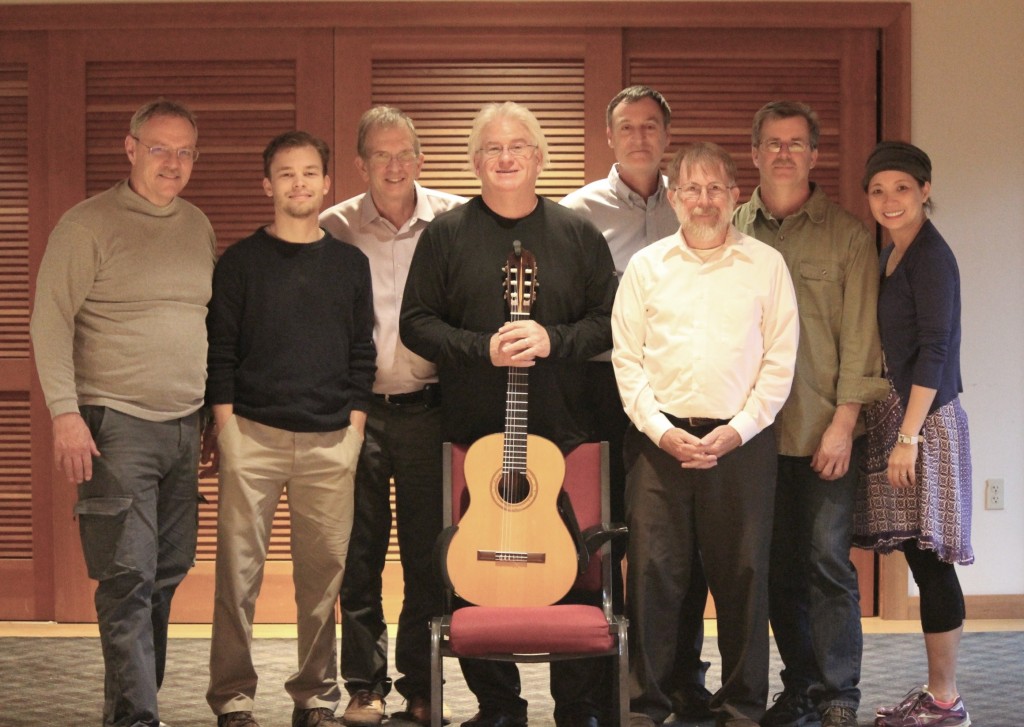
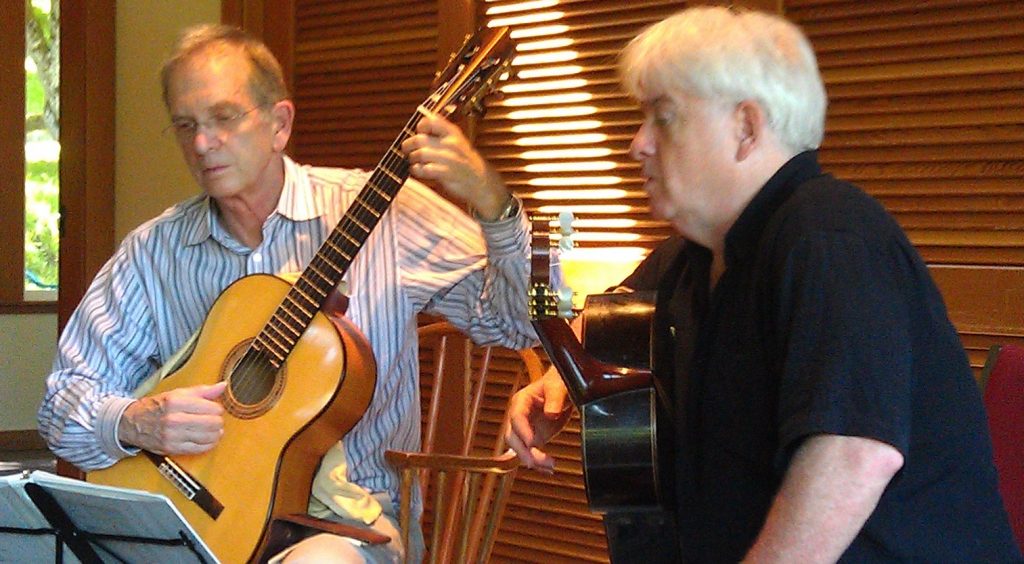
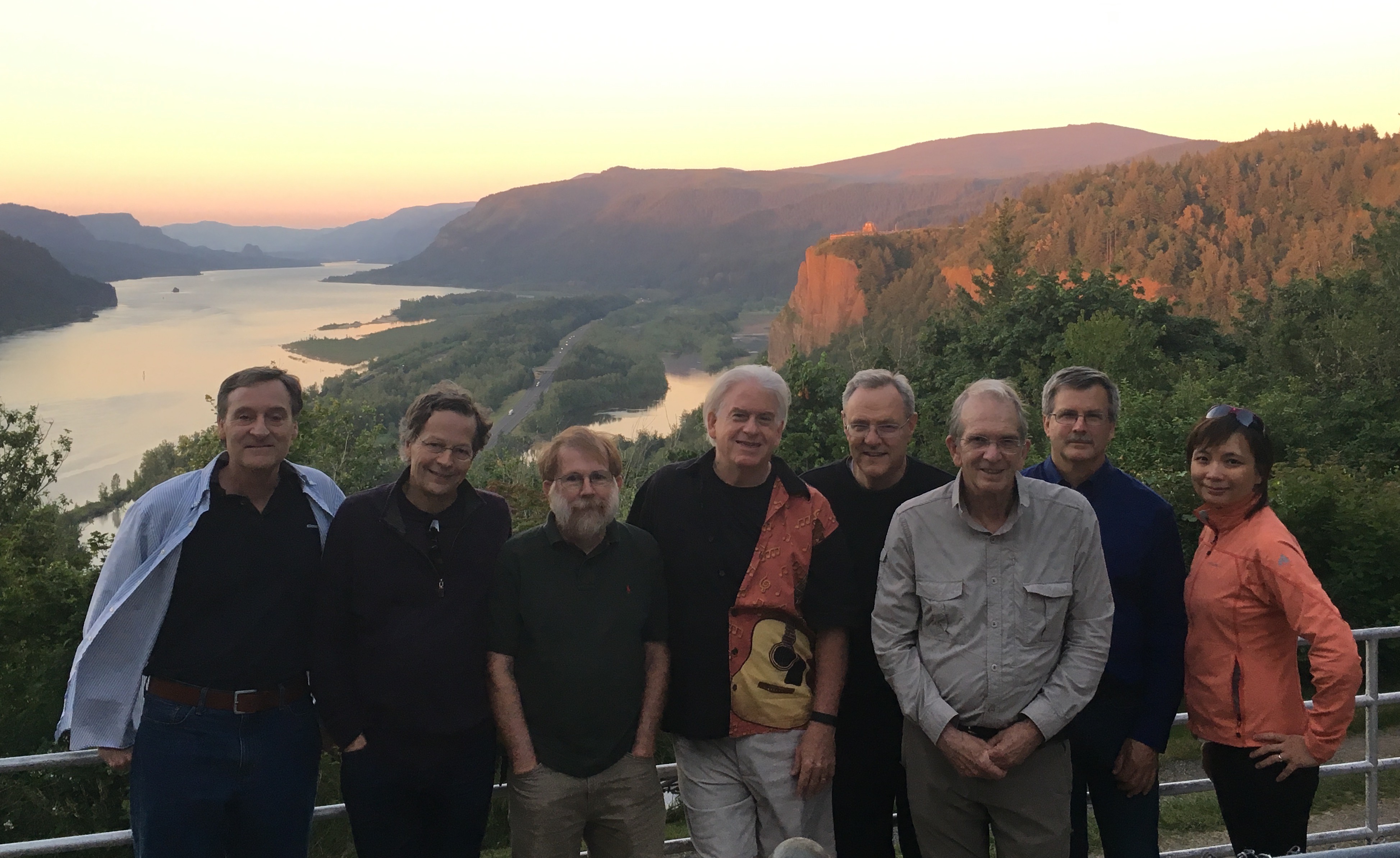
CGI is an immersion experience where a handful of guitarists join me for a week of performance preparation on the historic Columbia River Gorge at the Menucha Retreat and Conference Center in Corbett, Oregon.
UPDATE: CGI ’20 is currently sold out before the open registration date of September 1st! Cancellations do happen so those who would like to be put on a waiting list can send a refundable deposit of $395. You’ll be notified by April 5th (after final payment is due) if there is a spot available. If there are no spots available for you you’ll be refunded your deposit by April 10th. The good news is that with your deposit you’ll get the preparation benefits of my online workshops in preparation for CGI.
In this close and intimate setting students get personal attention through daily masterclasses where technique, practice concepts, and performance skills — including the tools to help eliminate the effects of performance anxiety — are explored. While proven teaching concepts are the foundation for our work, CGI is also shaped by its participants. Often we find a better way to express an old idea or sometimes even new concepts are formed, all by the community of players that make up CGI.
In fact what new wrinkle is discovered at CGI often becomes part of my teaching curriculum. CGI a functional learning organization, shaped in part by you!
In addition to our daily masterclasses we have an informal evening ensemble rehearsal.
The CGI Year in PREVIEW
CGI is more than just a week-long workshop but rather the culmination of months of direction to help in your preparation. Beginning months before CGI participants will be guided through preparation of the works to be performed at CGI in monthly online workshops. Beginning with the proper approach and continuing through the implementation of practice directive such as ‘Slow Practice’, ‘Goal Directed Movement’, ‘Backward Sectionals’ that will go towards establishing a strong technical foundation while solidifying the memorization of your new work.
As CGI approaches our workshop will cover the practice directives more aligned with musicianship skills and in the final preparation our workshops will focus on performance skills that help to eliminate the effects of performance anxiety.
These preliminary workshops will get you prepared to be playing at your peak when you arrive at CGI, where that peak level will be raised even further.
And if you happen to miss a workshop they will be available for viewing online.
CGI Overview
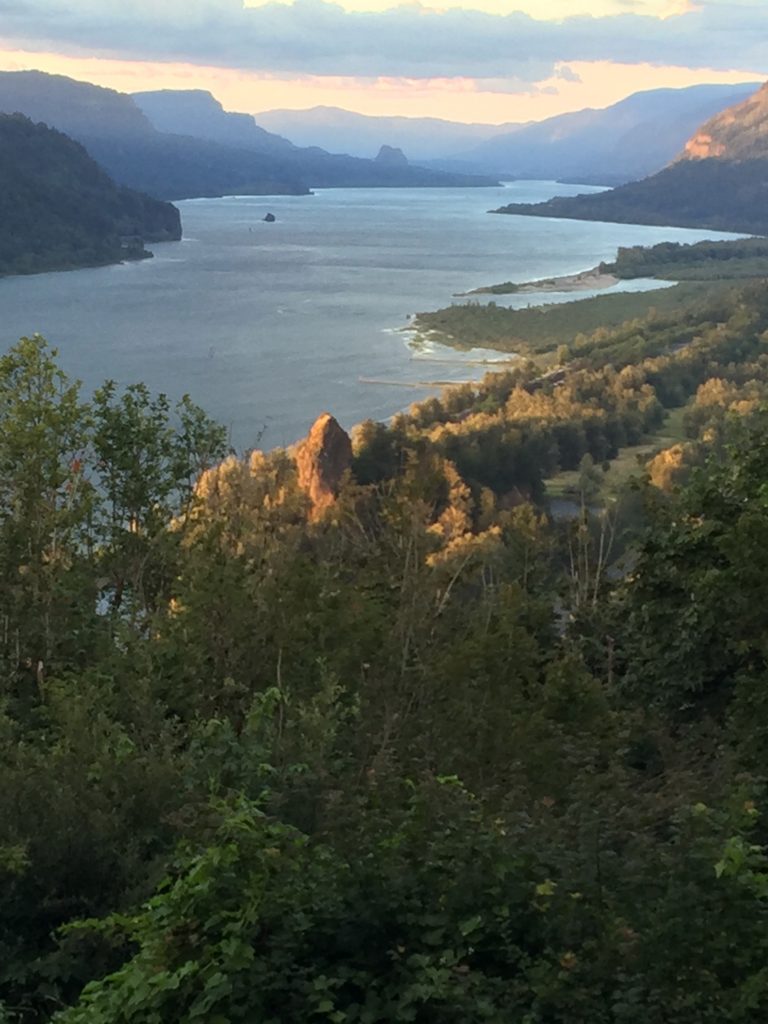
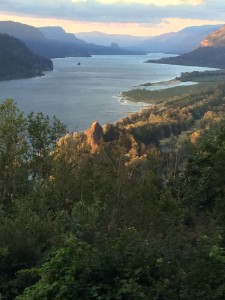
With panoramic views of the historic Columbia River Gorge the Menucha Retreat and Conference Center is the ideal location to immerse yourself in a week’s worth of classical guitar education. The daily schedule includes two master classes, ensemble rehearsal as well as technical and performance coaching. Spend your free time reviewing the video of your lesson, practice, compare notes, but also leave time to enjoy the grounds. It’s easy to find a few friends to walk the trails or play tennis (few brave the unheated outdoor pool), or spend time in reflection overlooking the beautiful Columbia River Gorge.
Three meals are provided each day in Wright Dining Hall. Special diets are available upon request.
All classes take place in Creevey Hall, a large teaching room attached to a large kitchen where personal food items can be stored and pre-breakfast gatherings take place amongst your fellow guitarists.
Each participant will have a private room and bathroom with shower.
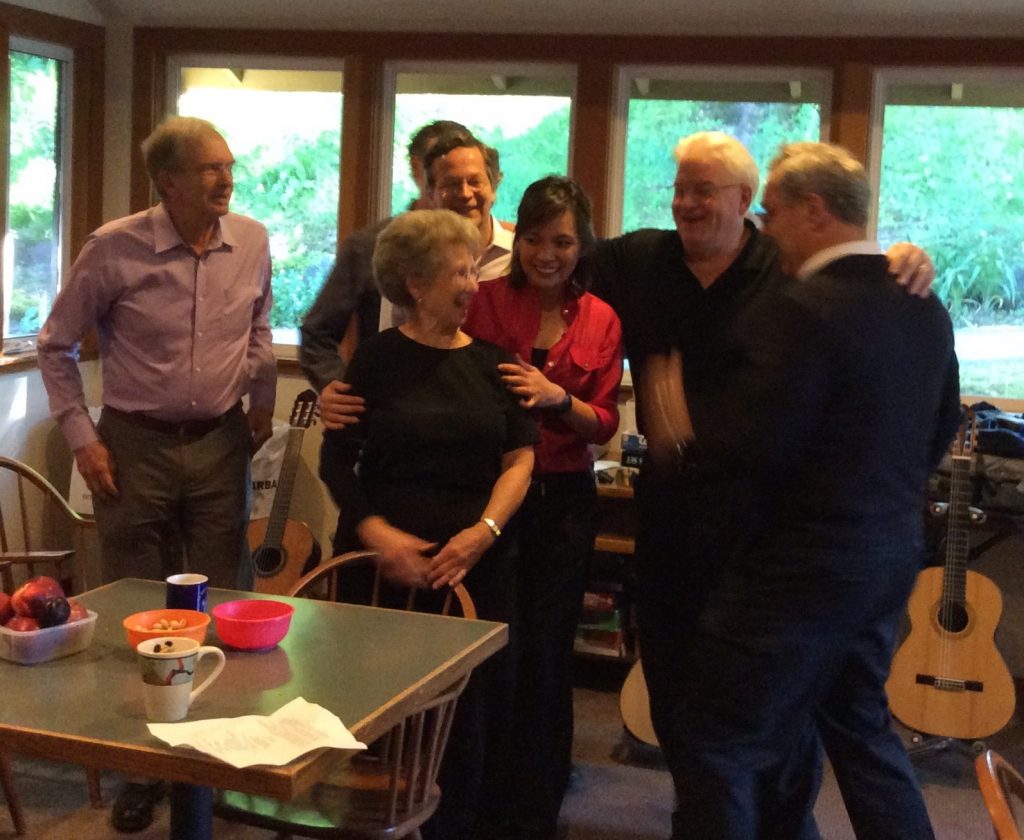
The social aspect of CGI is a big part of why people keep coming back. It’s all guitar, all week. It’s during our discussions around the dining table, morning coffee, or during walks around the beautiful grounds, where everyone shares their guitar experiences.
Repertoire
All levels are accepted at CGI. Strong preference will go to students familiar with my method. The only other requirement is that each student must be prepared to play at least two works, one from the study repertoire and one from the general repertoire, from memory, and the required ensemble piece from score. Our week culminates in a performance for the local Menucha community and special guests.
The ensemble music will be part of our final concert.
Saturday 8:00-9:00 Breakfast 9:30-11:30 Master Class 12:00-1:00 Lunch 1:00-3:30 Open 3:30-5:30 Master Class 6:00-7:00 Dinner 7:00-8:30 Ensemble Rehearsal
Sunday 8:00-9:00 Breakfast 9:30-11:30 Master Class 12:00-1:00 Lunch 1:00-3:30 Open 3:30-5:30 Master Class 6:00-7:00 Dinner 7:00-8:30 Ensemble Rehearsal
Monday 8:00-9:00 Breakfast 9:30-11:30 Master Class 12:00-1:00 Lunch 1:00-3:30 Open 3:30-5:30 Master Class 6:00-7:00 Dinner 7:00-8:30 Ensemble Rehearsal
Tuesday 8:00-9:00 Breakfast 9:30-11:30 Master Class 12:00-1:00 Lunch 1:00-3:30 Open 3:30-5:30 Master Class 6:00-7:00 Dinner 7:00-8:30 Ensemble Rehearsal
Wednesday 8:00-9:00 Breakfast 9:30-11:30 Ensemble Rehearsal and Performance Staging 1:00-3:30 Open 3:30-4:30 Performance Warm-up 4:30-5:30 Public Performance 6:00-7:00 Dinner 7:00-8:30 Performance Review
Thursday 8:00-9:00 Breakfast 9:30-11:30 Master Class (new works) 12:00-1:00 Lunch 1:00-3:30 Open 3:30-5:30 Building a Repertoire Base 6:00-7:00 Dinner 8:30-10:00 Outdoor Fireplace Gathering
Friday 7:30-8:00 Check-out 8:00-9:00 Breakfast
Schedule subject to change
Housing and Meals
Each participant will have a private room and bathroom/shower and a shared small living room area.
In addition we have private access to a large kitchen complete with microwave, coffee machine and refrigerator. Participants can bring snacks and drinks and store them in Creevey. We will meet in Wright Hall each day for meals. Breakfast, lunch and dinner are covered each day except for day of arrival (dinner only) and the final day of our departure (breakfast only).
Alternate diets can be accommodated at an additional cost of $40.00. An extensive list of options are available. Reserve your meals no later than four weeks prior to the first day of CGI. For more information, and to request an alternate diet, go to http://menucha.org/dining/alternatediet.
Fees & Deadlines
CGI cost is $2195.00 and includes all housing, meals and classes as well as monthly workshops prior to CGI.
A non-refundable deposit of $495.00 secures a spot. Registration to past participants opens immediately after the previous CGI and extends until September 1st.
Open Registration begins August 2nd (earlier deposits will be taken for open registration and any spots that open on that date will be given on a first-come-first-served basis).
Final Fee for CGI Performance Due: March 1st
Final Repertoire List Due April 1st
Alternate Dietary Requests Due: May 18th.
General Info
Menucha is a great place for doing some simple hiking. The hiking trails are relatively flat but you can find some hills. There are tennis and basketball courts as well as an outdoor (unheated) swimming pool.
The weather can be a little rainy, usually some nice weather but of course dress in layers. Bug repellant is not a bad idea for our annual outdoor fireplace night.
There are no phones or TVs in the rooms and wifi is rather slow but available. Click HERE for more information about your stay at Menucha.
Getting to Menucha
I want everyone to arrive no later than 4:00 pm on the 1st day. We will form a carpool made of up local students who can pick-up and drop off those flying into Portland International Airport.
Students should plan on staying through Friday breakfast on the final day.
Please send me the following to help coordinate your arrival:
Arrival time (local or remote students)
Cell phone number
Air travelers should also send your itinerary including arrival and departure times and flight numbers. (I’ll coordinate pick-ups and get everyone in contact with each other the week before)
Menucha Retreat and Conference Center 38711 East Historic Columbia River Hwy Corbett, OR 97019-0008 Phone: 503-695-2243 (9:00 am – 5:00 pm PST, weekdays)
I like to use my iPhone’s slow-motion camera to catch any technical inconsistencies that happen at speeds where such factors are hard to monitor. Here’s an excerpt from William Walton’s first Bagatelle for guitar. I was working on my alternation pattern at the end of the work. In real time it looks like this:
Here’s the same passage in slow motion. Notice the alternation (I and M fingers pass each other at the neutral position – helping to keep the pattern rhythmically accurate).
I made the slow motion video because I was looking for a breakdown that was occurring in the passage. After noting that my alternation was fine I realized the problem was in the left hand – that saved me a lot of wasted practice time.
In any case the use of slow motion video is a great way to break down problems that are too detailed to see in real time. In some cases I film passages played at the very top of my tempo range (or beyond) to find what is creating a barrier; is it technique or just the extent of my abilities?
Try this yourself. Even if you don’t know what you’re looking for with regard to the sympathetic or alternation patterns you can at least look for a uniformity. Are your fingers moving with the same excursion? Are they moving in time? Do they look coordinated? Its all there under the naked eye of the slow motion camera!
Posted inGuitar Tips|Comments Off on Right Hand Detail Work with a Slow Motion Camera
Classical Guitar Immersion – Performance Development – June 14-21, 2019 Menucha Retreat and Conference Center in Corbett, Oregon
CGI is an immersion experience where 7 guitarists join for a week of performance preparation on the historic Columbia River Gorge at the Menucha Retreat and Conference Center in Corbett, Oregon.
In this close and intimate setting students get personal attention through daily masterclasses, ensemble rehearsals and performance workshops where technique, practice concepts and performance skills including the tools to help eliminate the effects of performance anxiety are explored. In addition to the scheduled workshops friendships are developed through informal discussions around the dining table, morning coffee in CGI’s large private kitchen, on walks around the beautiful grounds or at the outdoor fireplace that overlooks the historic Columbia River Gorge.
The CGI Year in PREVIEW
CGI is more than just a week-long workshop but rather the culmination of months of direction to help in your preparation. Beginning in the summer prior to CGI participants will be encouraged to focus on technique and begin acquiring some new technical goals. In the fall participants will be encouraged to begin implementing practice directives such as ‘Slow Practice’, ‘Goal Directed Movement’, ‘Backward Sectionals’ that will go towards establishing a strong technical foundation while solidifying the memorization of your new work. Also, in the fall ensemble repertoire will be assigned.
Beginning in the new year participants will begin working on musicianship practice directive such as ‘Counting Measures’, ‘Vocalization’ and ‘Conducting’ Beginning in the spring participants we work on performance skills using the practice directives from my Performance Anxiety Rehab Workshop.
By rotating through a series of practice directives you’ll be better prepared for the week where you’re playing will peak as we work on performance preparation.
CGI Overview
With panoramic views of the historic Columbia River Gorge the Menucha Retreat and Conference Center is the ideal location to immerse yourself in a week’s worth of classical guitar performance preparation. The daily schedule includes two master classes, ensemble rehearsal, technical and performance coaching. Spend your free time reviewing the video of your lesson, practice, compare notes, but also leave time to enjoy the grounds. Its easy to find a few friends to walk the trails or play tennis (few brave the unheated outdoor pool), or spend time in reflection overlooking the beautiful Columbia River Gorge.
Three meals are provided each day in Wright Dining Hall. Special diets are available upon request.
All classes take place in Creevey Hall, a large teaching room attached to a large kitchen where personal food items can be stored and pre-breakfast gatherings take place amongst your fellow guitarists.
Each participant will have a private room and bathroom with shower.
Repertoire
All levels are accepted at CGI. Strong preference will go to students familiar with my method. The only other requirement is that each student must be prepared to play at least two works, one from the study repertoire and one from the general repertoire from memory and the required ensemble piece from score. We will perform two concerts on for the local Menucha community and special guests.
In addition we will be working on ensemble music, some of which will be part of our final concerts.
CGI Hand Stretches and Body Movement
In an effort to combat muscle and mental fatigue I’ll be teaching you hand and arm stretches. We’ll also learn a series of short functional movements that will not only help revitalize the back and shoulders but also reset the negative affects of sitting.
Saturday
8:00-9:00 Breakfast
9:30-11:30 Master Class
12:00-1:00 Lunch
1:00-3:30 Open
3:30-5:30 Master Class
6:00-7:00 Dinner
7:00-8:30 Ensemble Rehearsal
8:30-9:00 Technical Warm-Down
Sunday
8:00-9:00 Breakfast
9:30-11:30 Master Class
12:00-1:00 Lunch
1:00-3:30 Open
3:30-5:30 Master Class
6:00-7:00 Dinner
7:00-8:30 Ensemble Rehearsal
8:30-9:00 Technical Warm-Down
Monday
8:00-9:00 Breakfast
9:30-11:30 Master Class
12:00-1:00 Lunch
1:00-3:30 Open
3:30-5:30 Master Class
6:00-7:00 Dinner
7:00-8:30 Ensemble Rehearsal
8:30-9:00 Technical Warm-Down
Tuesday
8:00-9:00 Breakfast
9:30-11:30 Master Class
12:00-1:00 Lunch
1:00-3:30 Open
3:30-5:30 Master Class/Performance I
6:00-7:00 Dinner
7:00-8:30 Performance I Review
8:30-9:00 Technical Warm-Down Wednesday
8:00-9:00 Breakfast
9:30-11:30 Ensemble Rehearsal and Performance Staging
12:00-1:00 Lunch
1:00-3:30 Open
3:30-4:30 Performance Warm-up
4:30-5:30 Public Performance (II)
6:00-7:00 Dinner
7:00-8:30 Performance II Review
Thursday
8:00-9:00 Breakfast
9:30-11:30 Goals and Repertoire
12:00-1:00 Lunch
1:00-3:30 Open
3:30-4:30 Ensemble Rehearsal and Warm-up
4:30-5:30 Private Performance (III)
6:00-7:00 Dinner with Guests
8:30-10:00 Outdoor Fireplace Gathering
Friday
7:30-8:00 Check-out
8:00-9:00 Breakfast
Schedule subject to change
Housing and Meals
Each participant will have a private room and bathroom/shower and a shared small living room area. In addition we have private access to a large kitchen complete with microwave, coffee machine and refrigerator. Participants can bring snacks and drinks and store them in Creevey which is locked each night. We will meet in Wright Hall each day for meals. Breakfast, lunch and dinner are covered each day except for the Friday of our arrival where we will have dinner only and the Friday of our departure where we will have breakfast only.
Alternate diets can be accommodated at an additional cost of $40.00. An extensive list of options are available. Reserve your meals no later than four weeks prior to the first day of CGI. For more information, and to request an alternate diet, go to http://menucha.org/dining/alternatediet.
Fees & Deadlines
CGI cost is $1995.00 and includes all housing, meals and classes.
A non-refundable deposit of $495.00 secures a spot. Registration to past participants opens immediately after the previous CGI and extends until August 1st .
Open Registration begins August 2nd (earlier deposits will be taken for open registration and any spots that open on that date will be given on a first-come-first-served basis).
Final Fee for CGI Due: March 1st
Final Repertoire List Due April 1st
Alternate Dietary Requests Due: May 18st
General Info
Menucha is a great place for doing some simple hiking. The hiking trails are relatively flat but you can find some hills. There are tennis and basketball courts as well as an outdoor (unheated) swimming pool.
The weather can be a little rainy, usually some nice weather but of course dress in layers. Bug repellant is not a bad idea for our annual outdoor fireplace night.
There are no phones or TVs in the rooms and wifi is rather slow but available. Click HERE for more information about your stay at Menucha at this link
Getting to Menucha I want everyone to arrive no later than 4:00 pm on Friday, June 16th. We will form a carpool made of up local students who can pick-up and drop off those flying into Portland International Airport.
Students should plan on staying through Friday breakfast, June 23rd.
Please send me the following to help coordinate your arrival:
Arrival time (local or remote students)
Cell phone number
Air travelers should also send your itinerary including arrival and departure times and flight numbers. (I’ll coordinate pick-ups and get everyone in contact with each other the week before)
Menucha Retreat and Conference Center
38711 East Historic Columbia River Hwy
Corbett, OR 97019-0008
Phone: 503-695-2243 (9:00 am – 5:00 pm PST, weekdays)
Classical Guitar Immersion – Performance Development – SOLD OUT (see information below of TWO CGI’s coming in 2019* )
CGI is an immersion experience where 7 guitarists join for a week of performance preparation on the historic Columbia River Gorge at the Menucha Retreat and Conference Center in Corbett, Oregon.
In this close and intimate setting students get personal attention through daily masterclasses, ensemble rehearsals and performance workshops where technique, practice concepts and performance skills including the tools to help eliminate the effects of performance anxiety are explored. In addition to the scheduled workshops friendships are developed through informal discussions around the dining table, morning coffee in CGI’s large private kitchen, on walks around the beautiful grounds or at the outdoor fireplace that overlooks the historic Columbia River Gorge.
*Classical Guitar Immersion – Technique – May 19-24, 2019 (space is limited)
In 2019 I’ll be adding a second CGI on Technique. This will coincide with the fall 2018 release of my method Primary Skills Development. Participants will work online through my method. In addition I’ll be meeting personally with participants in monthly live workshops beginning in January to 2019. Our work will culminate at CGI Technique in May 2019. Participants must complete Phase I Primary Skills Development prior to CGI Technique.
I have two more performances scheduled for the remainder of the Fall of 2017. Friday, October 13th at noon I’ll be performing at Portland Community College’s Sylvania Campus’ Little Theatre (CT201). On Saturday, October 21st at 2:00 pm I make my first Seattle appearance in a performance sponsored by the Seattle Guitar Society at the Frye Museum’s Recital Hall located at 704 Terry Avenue. Admission to both concerts is FREE.
These programs will features a trio of works from the ballet music of Spanish composer Manuel de Falla, Sir William Walton’s landmark work The Five Bagatelles for Guitar my own arrangements of Lou Harrison’s Waltz for Evelyn Heinrichen, originally for piano, and Puccini’s Nessun Dorma as well as movements from Sylvius Leopold Weiss’ Sonata No 34.
This program hits on all my favorite eras and styles for the classical guitar. I’ve been trying to get Walton’s Five Bagatelles, one of my first loves, back on my program for over a decade. And I’ve always loved playing the de Falla – these charming works are really casting their spell on me in my practice room.
Please see my Upcoming Events Side Bar for more information.
Posted inGuitar Tips|Comments Off on Upcoming Performances
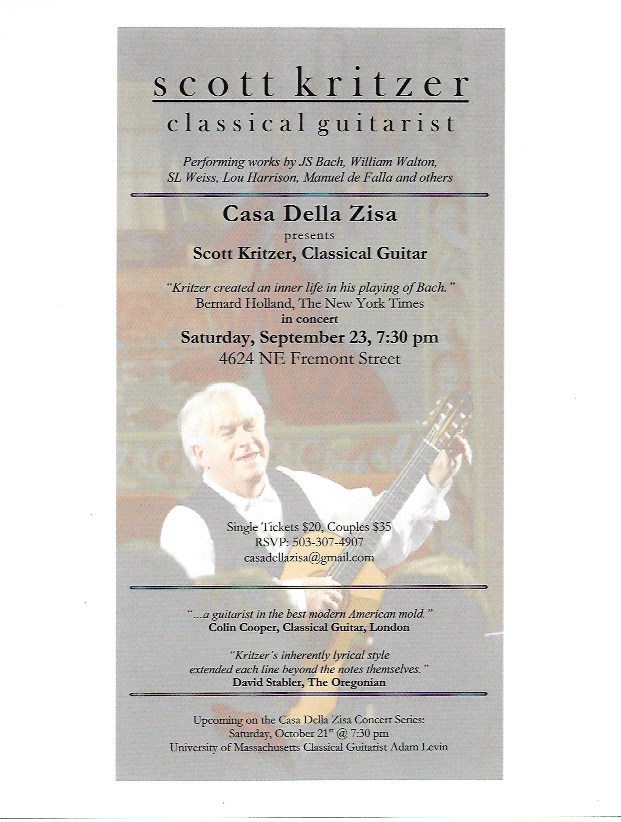
I’ll be will previewing my upcoming Seattle Guitar Society performance in a special Portland performance at Casa Della Zisa located at 4624 NE Fremont Street in Portland, Oregon on Saturday October 7th at 7:30 pm.
The program features J.S. Bach’s Prelude and Fuge, BWV 539a, originally for organ, my own arrangement of Lou Harrison’s Waltz for Evelyn Heinrichen, originally for piano, and movements from Sylvius Leopold Weiss’ Sonata No 34. I’m also bringing back repertoire from my past; a suite of works from the ballet music of Spanish composer Manuel de Falla and Sir William Walton’s landmark work The Five Bagatelles for Guitar.
This program hits on all my favorite eras and styles for the classical guitar. I’ve been trying to get Walton’s Five Bagatelles, one of my first loves, back on my program for over a decade. And I’ve always loved playing the de Falla – these charming works are really casting their spell on me in my practice room.
Make your reservations now by emailing Peter Zisa at casadellazisa@gmail.com or by calling (503) 307-4907. Seating is limited.
Here’s a recent performance from my performance in Bozeman, Montana of Reginald Smith-Brindle’s work “El Polifemo de Oro” inspired by Garcia Lorca’s poem.
At the round
crossroads,
six maidens
dance.
Three of flesh,
three of silver.
the dreams of yesterday search for them,
but they are held embraced
by a polyfemus of gold.
The Guitar!
The polyfemus of gold (cyclops of gold) references the guitar with a face of gold and a single eye (the sound hole). Three of flesh and three of silver reference the strings of the guitar….
Posted inGuitar Tips|Comments Off on El Polifemo de Oro (four fragments for guitar) by Reginald Smith-Brindle
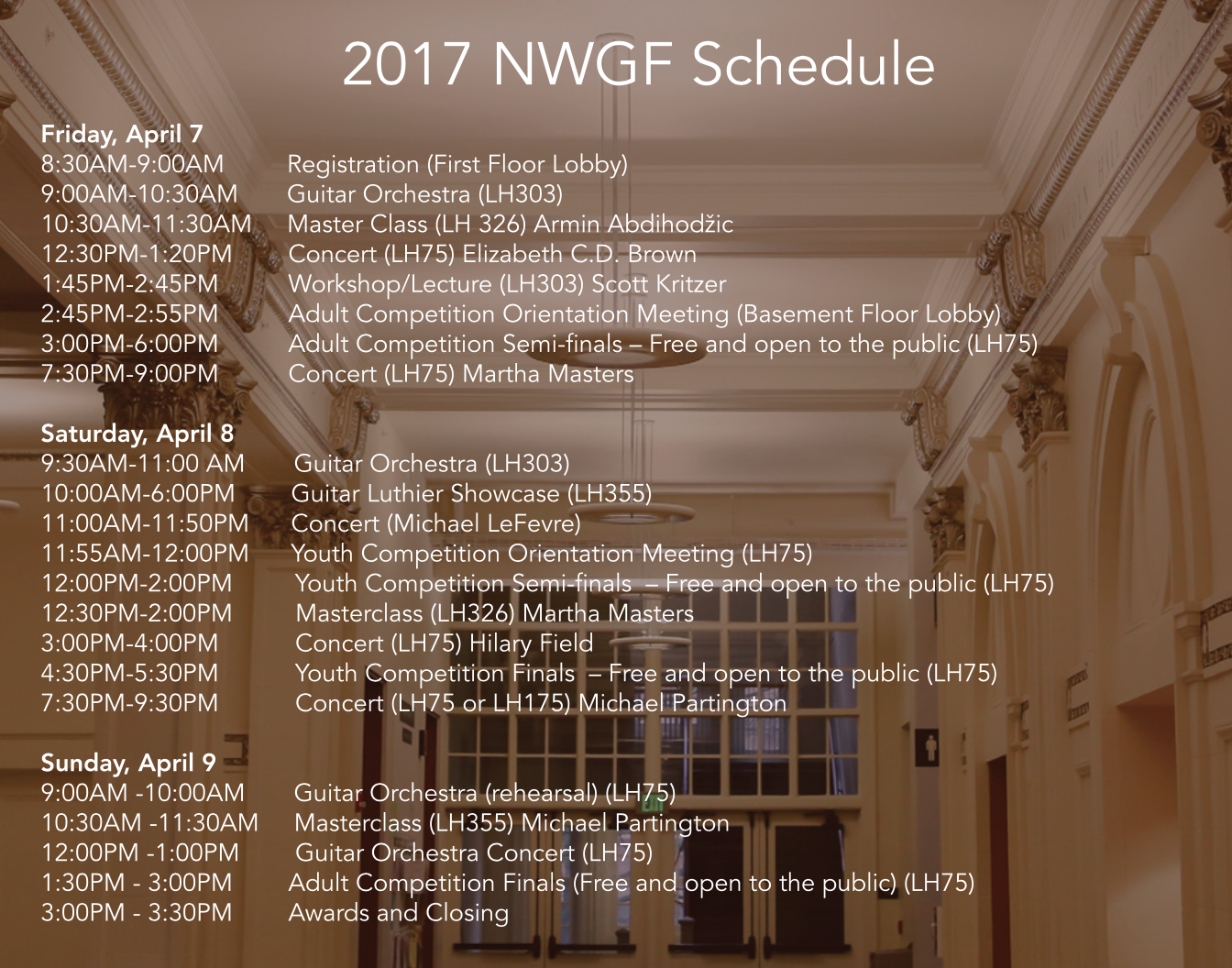
I’ll be previewing my soon to be released Phase I Primary Skills Development in a lecture/workshop at the 26th annual Northwest Guitar Festival to be held at Portland State University in Portland, Oregon from Friday April 7 through Sunday April 9.
Featured at the NWGF will be evening recitals by Martha Masters, Michael Partington and Hilary Field. Afternoon
recitals will be presented by Elizabeth C.D. Brown and Michael Lefevre. In addition there will be masterclasses, a guitar orchestra performance and two competitions as well as a lecture by yours truly. (Festival schedule is below)
My lecture cover right hand technique and will take place Friday, April 7th from 1:45-2:45 in Lincoln Hall’s room LH303. In addition I’ll be performing Fernando Sor’s duet L’ encouragement with festival director Jesse McCann with the festival orchestra (arrangement by Bryan Johanson) lead by John Mery on Sunday, April 9th from noon to 1 pm. Amateurs are encouraged to participate – its a great way to meet other guitarists!
Registration for the festival is $125 – what a deal. Portland Guitar Society members get an even better deal; $40 for the entire festival.
To register you can make checks payable Portland State University, School of Music.
Attn: Jesse McCann
P.O. Box 751 College of the Arts, School of Music
Portland State University
Portland, OR 97207-0751
You can view the festival brochure on line HERE. For more information go to NWGF 17’s website HERE.
Posted inGuitar Tips|Comments Off on Northwest Guitar Festival 2017 Presentation on Right Hand Technique
Fantasy on E Lucevan by Glenn Morley A work written for the Chvatal/Kritzer Duo and orchestra. February 14th, 2022 (available on all streaming platforms)
 Center is the ideal location to immerse yourself in a week’s worth of classical guitar performance preparation. The daily schedule includes two master classes, ensemble rehearsal, technical and performance coaching. Spend your free time reviewing the video of your lesson, practice, compare notes, but also leave time to enjoy the grounds. Its easy to find a few friends to walk the trails or play tennis (few brave the unheated outdoor pool), or spend time in reflection overlooking the beautiful Columbia River Gorge.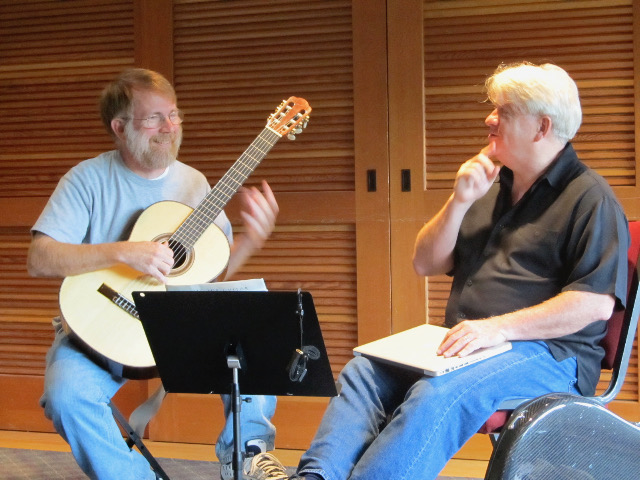


 at the 26th annual Northwest Guitar Festival to be held at Portland State University in Portland, Oregon from Friday April 7 through Sunday April 9.