Europe Summer 2011

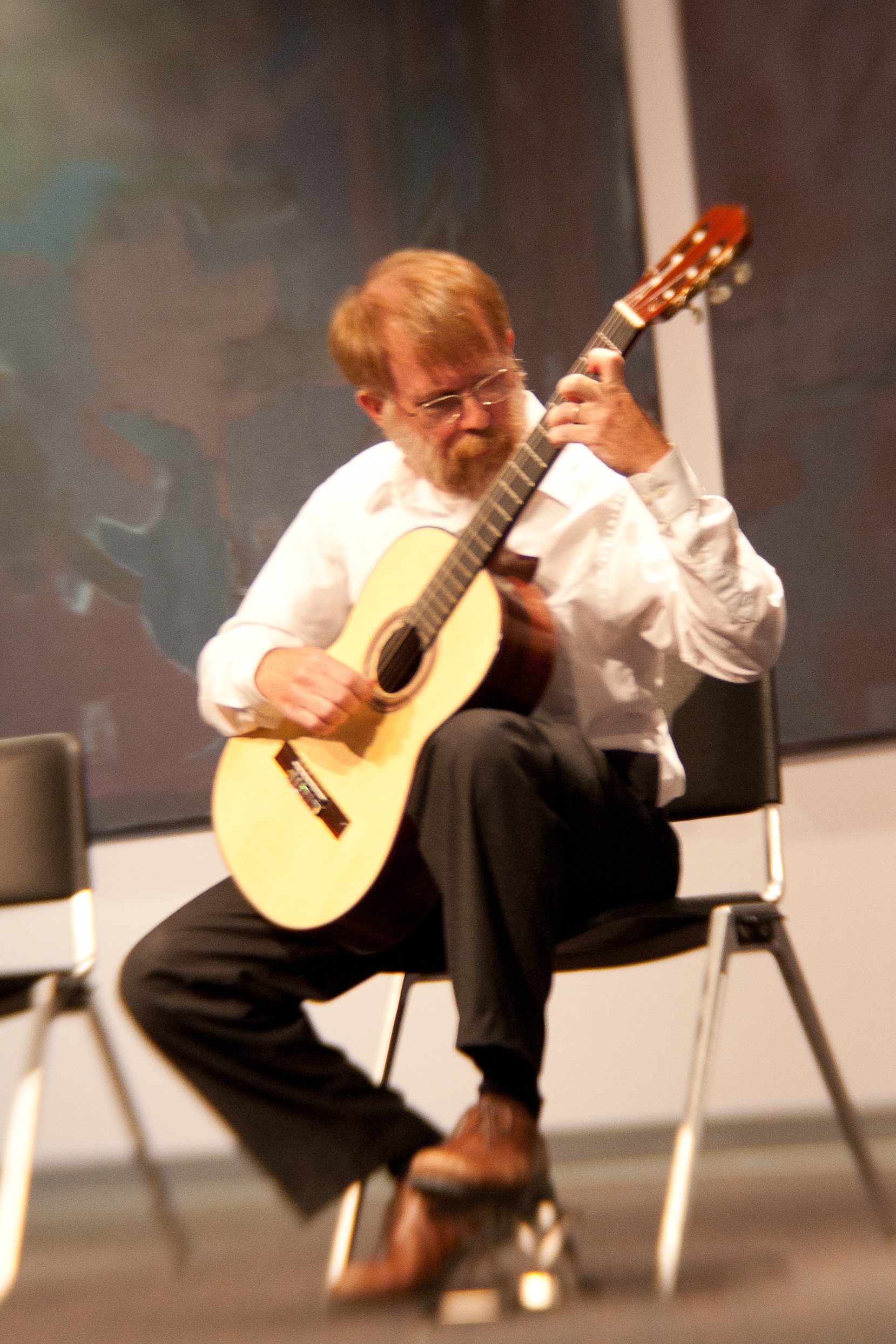
Here are a couple of slide shows from my recent European performances. It was a dreamlike tour; a week in Bavaria where I was reunited with soprano Janet Chvatal with a cavalcade of performers, (another guitarist, singers and orchestra) in the Neuschwanstein Castle. Neuschwanstein Castle Performance 2011 Slideshow

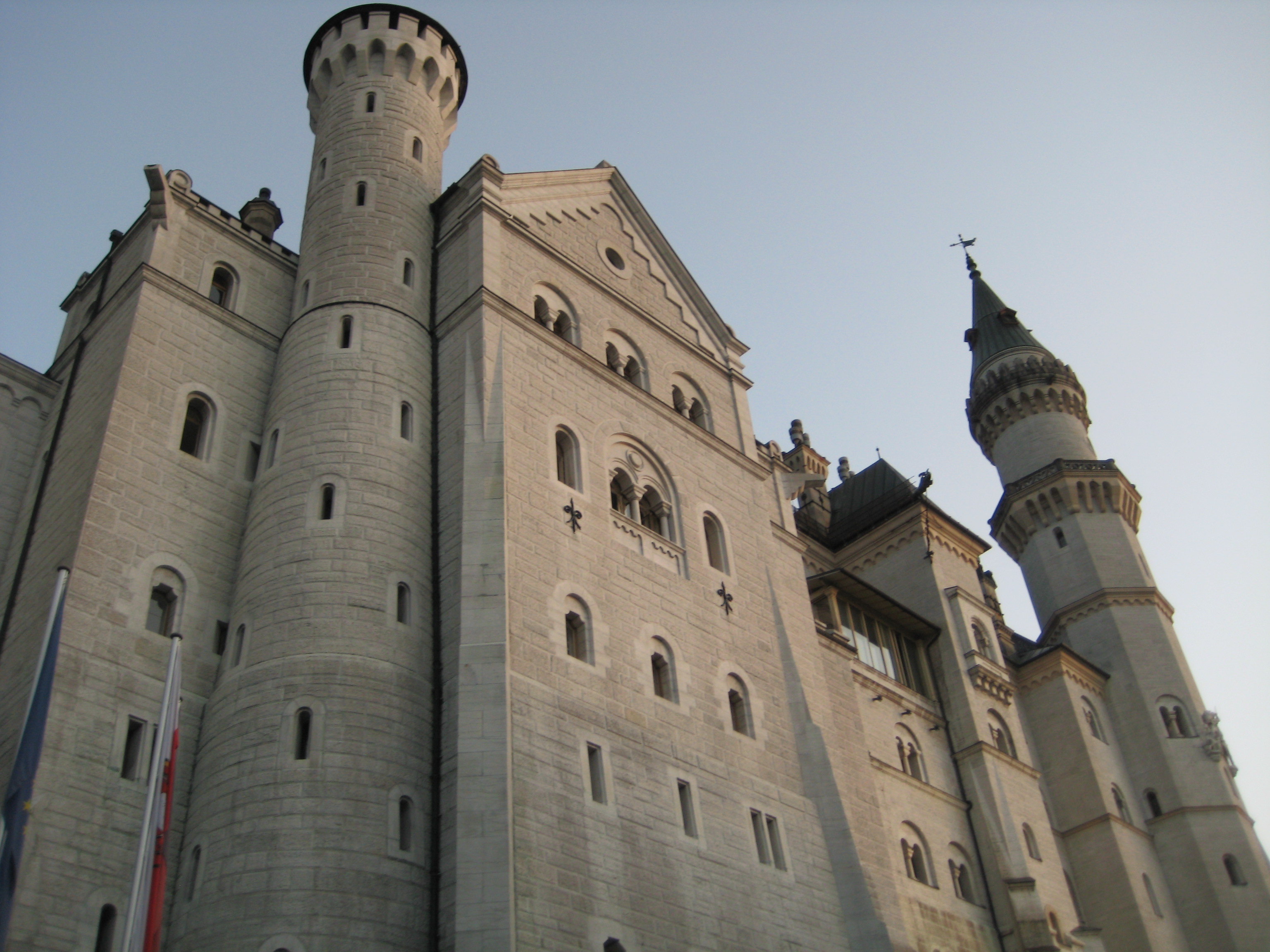
Neuschwanstein Castle

Then it was a beautiful week on the Adriatic in Rimini, Italy. My ‘Guitar Vacazione’ included a week-long masterclass that concluded with a wonderful performance in the picturesque town of San Filippo. Then back to Bavaria for a week’s vacation with my wife Teresa, (and a few more private performances). European Summer 2011 Slideshow

Hope you enjoy! Please leave your comments below!

Scott

Posted in Stories Behind the Music | Tagged , , , , , , , , , , , , , , | Comments Off on Europe Summer 2011

Technique Workshop

Saturday, January 14th to February 18th, 2-4 pm

The serious classical guitarist who wishes to study, play, and ultimately perform, will find the need for a strong technical foundation. A strong technical foundation can be achieved when our hands are working with optimal strength and coordination, which is best achieved by adhering to bio-mechanical principles.

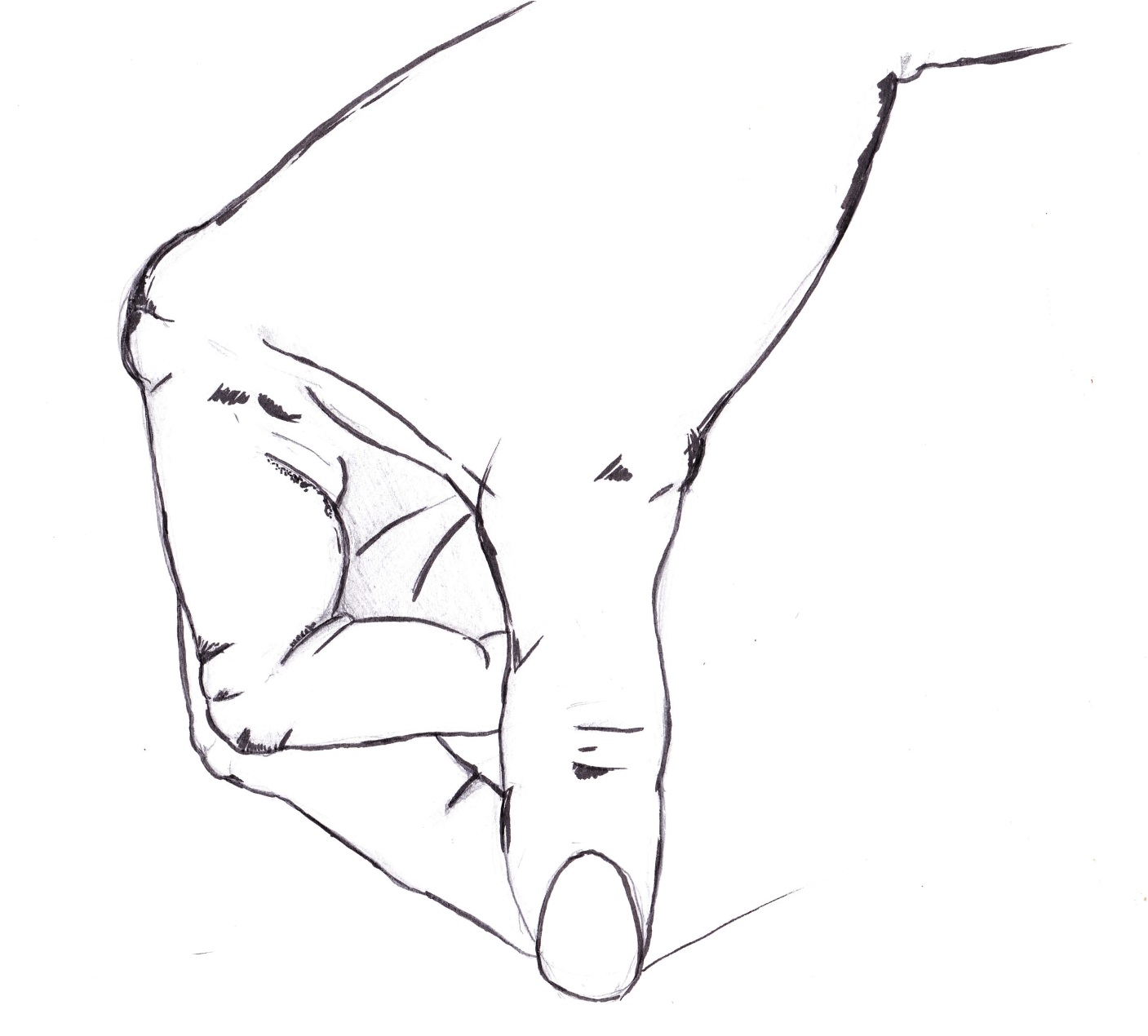
'I' in the flexed position, 'M' extended position. Illustration by David Kritzer

The benefits of playing with a good technique should be obvious: strong scales and arpeggios provide a basis for establishing strength and coordination, or what we call the primary skills. Another benefit of good technique results in the ability to perform our repertoire with fewer mistakes. Yet another advantage is longevity. While poor technique will cause more errors and require more effort than necessary, equally inhibiting can be the effect of the wear and tear resulting from improper technique, often shortening the careers of even the most talented of players. Continue reading

Posted in Technique, Workshops | Tagged , , , , , , , , , , | Comments Off on Technique Workshop

Student News – Paul Ketcham

I remember clearly my decision to pursue the study of classical guitar. Following a concert of the (original) Oregon Guitar Quartet, contacted Scott Kritzer, one of it’s members, and told him I wanted to study guitar, and that I was a beginner. To my delight, he took me on. That was 1988! During my 17 years of study I have married and started a family of my own. My love of the study and practice of classical guitar has persisted through all of these life changes. Continue reading

Posted in Kritzer Studio News | Tagged , , , , , , , , | 2 Comments

Kritzer Studio Guitar Quartet

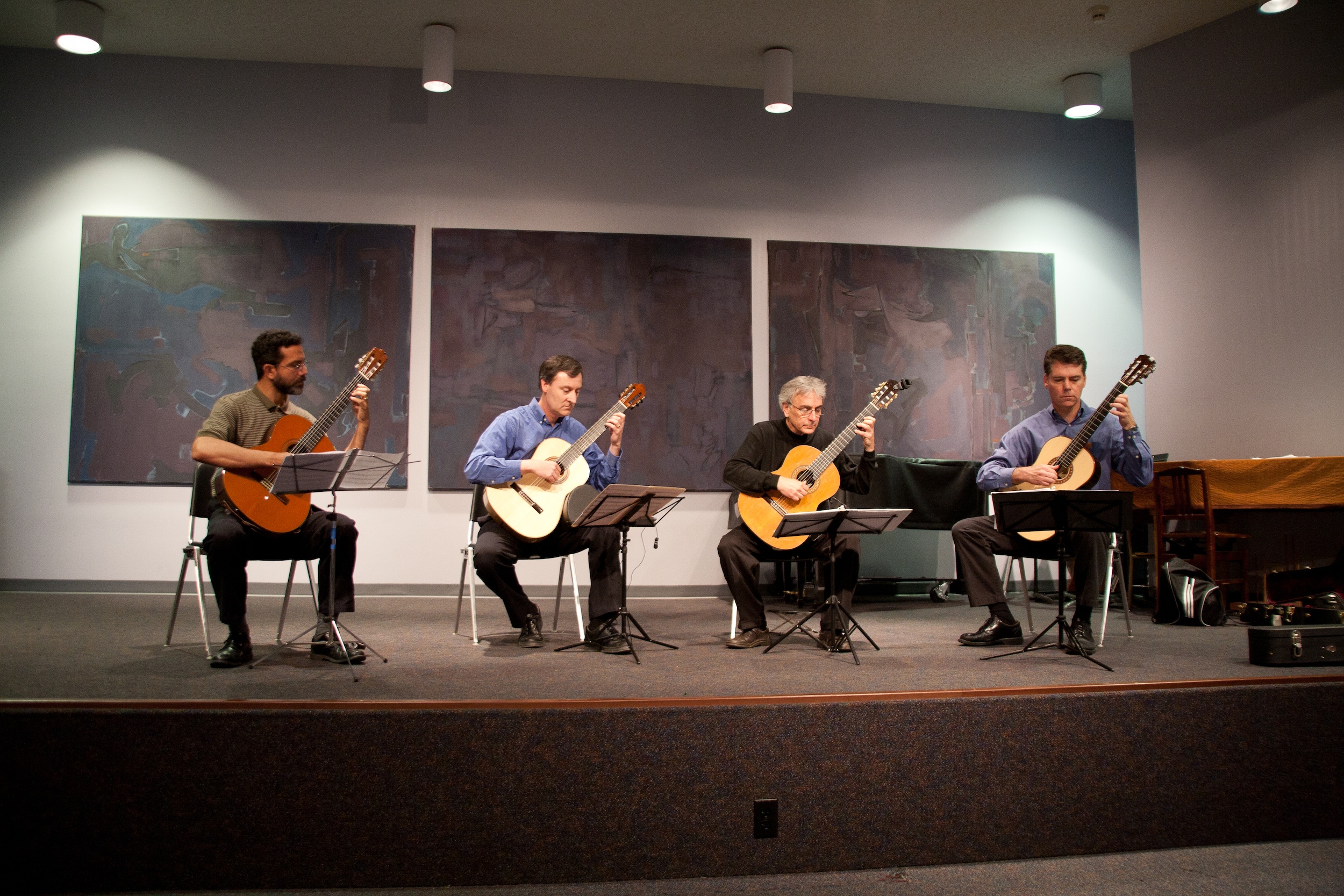
KSGQ

The Kritzer Studio Guitar Quartet will start it’s monthly rehearsals on Wednesday, October 26th at 7:00 pm at the Division Street Studio. We’ll be doing the same pieces as last year (if you participated last year keep the same parts), which include the Telemann Quartet in D, the second movement from the Vivaldi Concerto RV 532 and the Maple Leaf Rag by Scott Joplin. New students who’d like to join in are welcome — it’s always nice to have more than one person on a part!

CGI Quartet

Telemann Quartet in D performed by CGI Guitar Ensemble

Continue reading

Posted in Kritzer Studio News | Tagged , , , , , | Comments Off on Kritzer Studio Guitar Quartet

Kritzer Studio 2012 Student Recital

Nothing helps shape our practice than an upcoming performance so let’s start talking about your involvement in this spring’s Kritzer Studio Student Recital. What piece(s) would you like to perform? Perhaps you want to brush up an old set of pieces or learn something new. Now’s the time to make the plan! Once we determine your music we’ll form a long range practice plan to bring your playing up to a new level by this spring!

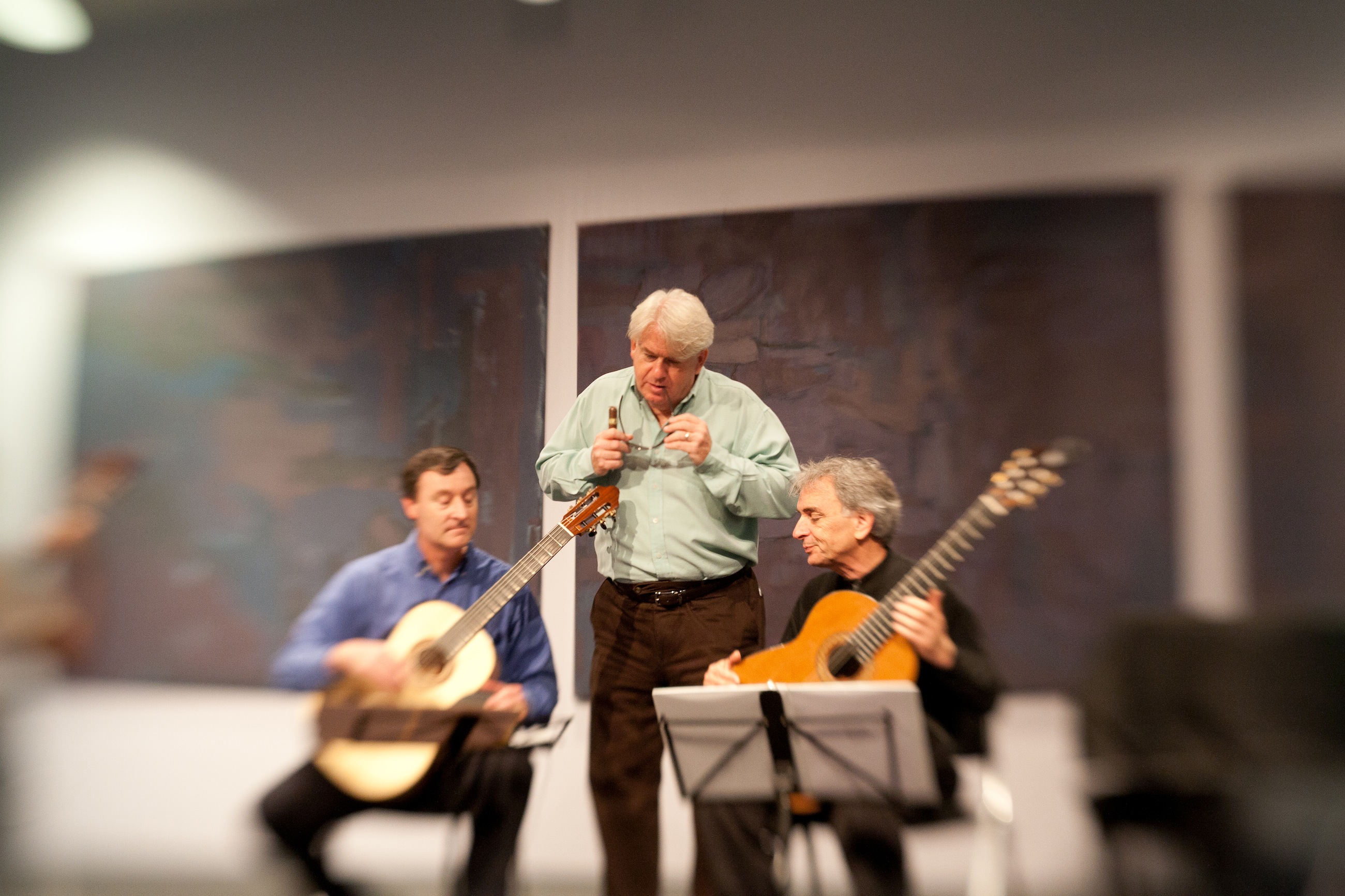
Tom and Patrick Receive Last Minute Performance Notes

The date of the performance has not been set but I am looking at May 2012.

Please post your thoughts below….

Scott

Posted in Kritzer Studio News | Tagged , , , , , , , , , | 2 Comments

Neuschwanstein Castle Performances, Germany 2011

As I sit on the train to my next performance and master class in Rimini, Italy , with the Alps slowly receding into rolling hills and fields, lakes with morning fog holding close, I’d like to capture some of my thoughts on my last week in the picturesque town of Fussen.

After days of rehearsals, program and musical revisions, and sound checks; after the post concert party, where we held toasts, hugged, and where I said goodbye to some who, sadly, I probably will never see again, soprano Janet Chvatal and I sat alone for a few minutes, and she reminded me why we were here.

Neuschwanstein Castle - up close for the first time!

Continue reading

Posted in Stories Behind the Music | 13 Comments

Master Class – The ‘New’ Kritzer Technique

Technique is one subject that the serious classical guitar student must face sooner or later. Yet, as pedagogies go, the classical guitarist is generally weak on the subject. Although technical ideas abound regarding scales, slurs, and the like, the “how to” is often lacking in terms of teachable execution. Even harder to find is a technical approach that is based on the bio-mechanics of the human body. But here’s the good news; the movements required to play the classical guitarist’s repertoire can be reduced to just a few bio-mechanically appropriate forms. It seems as if the human body was designed to play the classical guitar.

The New Kritzer Technique class will be held on Saturday, September 24th, 2011, at 2 PM PDT. For cost and registration, please see below.

Class Content

The class will be focused on positioning and

'I' in the flexed position, 'M' extended position. Illustration by David Kritzer

movement principles, and how these apply to the classical guitarist’s technique. We’ll cover hand positions, sitting positions, and the following movement forms: alternation, string crossing, complex alternation, sympathetic motion, and compound motion. We’ll also cover the concepts of how best to produce finger movement, and my new concepts for finger positioning (flexed, neutral, extended, and hyper-extended), passive recoil response, as well as the active and passive finger role in sympathetic motion. Finally, you’ll learn how to integrate these movements into your repertoire. Continue reading

Posted in Technique, Workshops | Tagged , , , , , , , , , , | 3 Comments

Performance Anxiety Rehab (PAR) PODS

The popular informal performance gathering of PAR PODS begins again this fall on Wednesday, September 14th at 7 pm at St. Matthew Lutheran Church located on Canyon Road, east of Hwy 217 in Beaverton.

Those who have taken my Performance Anxiety Rehab Workshop (PAR) are familiar with the concepts that we work towards in these informal meetings. But you don’t need to be a seasoned veteran of PAR or even the stage. You don’t even need to be a guitarist, or a classical musician – just interested in understanding how to cure the affects of performance anxiety, or you just want to be an audience member, (musician or not!).You can feel free to attend and be guided by the group or just observe! (Performance space is limited though).

Charlie Performs


We’ll have a brief introduction, you’ll sign up for a slot and away we go. Those who are experienced will announce what Performance Directive they have been working on and what percentage of time they feel they achieved their objective in practice.

One of the most important aspects of the PAR PODS is the immediate feedback you get from your fellow members. If we are truly ‘in the zone’ we are inhibited from judging and so while we might be performing at a much higher level its often difficult to judge those results. It’s the other members who will be able to give you feedback regarding when you seemed to be ‘in the zone’ or not. This gives the player critical information as to whether they were as successful at achieving the performance goals in practice as they perceived.

So please contact me HERE if you want to attend and I’ll let you know if there is still space! Thanks to Ken Ewing, by the way, for setting this up. And Ken, there’s always space for you!

Posted in Guitar Tips | Tagged , , , , , , , | 4 Comments

Integrating Technique into Repertoire

I have an embarrassing confession to make. A few years back, I was thinking of playing in a master class for Pepe Romero. I remember thinking, “Wouldn’t it be cool if he saw my right hand and at least thought to himself, ‘Hey, this guy’s got it going on!'” I videotaped myself playing some repertoire, and to my shock, none of the principles I had learned in my technical work, aside from positioning, were evident. My movements were tight, negating the fluid affects of true alternation or sympathetic motion.

Yet I can easily replicate these movement forms in my technique. I have been teaching rules for alternation and sympathetic motion to all my students for decades, and we all exercise these movements in our technical work with scales and arpeggios. And since roughly 98% of the guitar’s repertoire is comprised of one of these two movement forms I assumed that simply mastering them in technical work would be enough to allow them to ‘roll over’ into repertoire.

Sadly, I found after decades, that these movements do not come to fruition in the sense of applying themselves to our repertoire! We must consciously and perhaps continually integrate the patterns into our repertoire if we want the benefits to manisfest in performance. This, as you can imagine, was quite a sobering realization. But, as I thought about it I realized that my performances were always less satisfying than I wanted with regards to technique. It seemed that my hand would tire, tighten and I would make mistakes that I knew I shouldn’t. At times on stage I would feel like my hands weren’t my own! But why? Well, I found two reasons. 1) These movement forms can’t exist when the distance the finger should travel is shortened and 2) the actual analysis of the movement forms must be notated and practiced into the repertoire.

Range of Motion

First, let’s talk about Range of Motion:  the distance the finger travels whenever it makes a stroke. A shortened range of motion is tight—the result of exerting the flexors and extensors almost simultaneously. As an analogy, think of driving your car with both the gas and break pedals held down. The tightness causes tension. But, when we perform, we want to be accurate.  Here is the big disconnect: accuracy is not attained by keeping your fingers close to the strings, but by employing a motion that exhausts the flexors which results in more motion inwards. Continue reading

Posted in Guitar Tips, Technique | Tagged , , , , | 2 Comments

Thoughts on Performance Anxiety

The following is a recent post on the DelCamp Classical Guitar Forum in response some threads on Performance Anxiety. This was a response to using beta blockers and other ideas for helping with PA. Seems there might be interest in another PAR Workshop this fall (moved up from next Spring). If you want to keep posted please SUBSCRIBE.

I’m not a big fan of beta-blockers. I dabbled in these for a while on a very small dose. I found (and others who admitted to have taken them), memory to be an issue. I was relaxed, maybe too relaxed and a little ‘numb’ and a bit forgetful. It was a funny trade-off; be relaxed but manifest a performer’s top fear: forgetting the music.

I think performance anxiety (nerves) and the physical manifestation of such can be dealt with two ways. Performance anxiety (and your good suggestions of breathing, letting go), etc. are best done in practice. Doing them just before a performance won’t be as effective as practicing these concepts into a piece, (if that is what you’re suggesting). I teach a Performance Anxiety Rehab Workshop and we’ve come up with a fun pneumonic: B.L.I.S.S. which stands for Breath, Listen/Let Go, Integrate*, Slow, SLOW. Continue reading

Posted in Performing Skills | Tagged , , , , , , , , , , , , | 6 Comments